

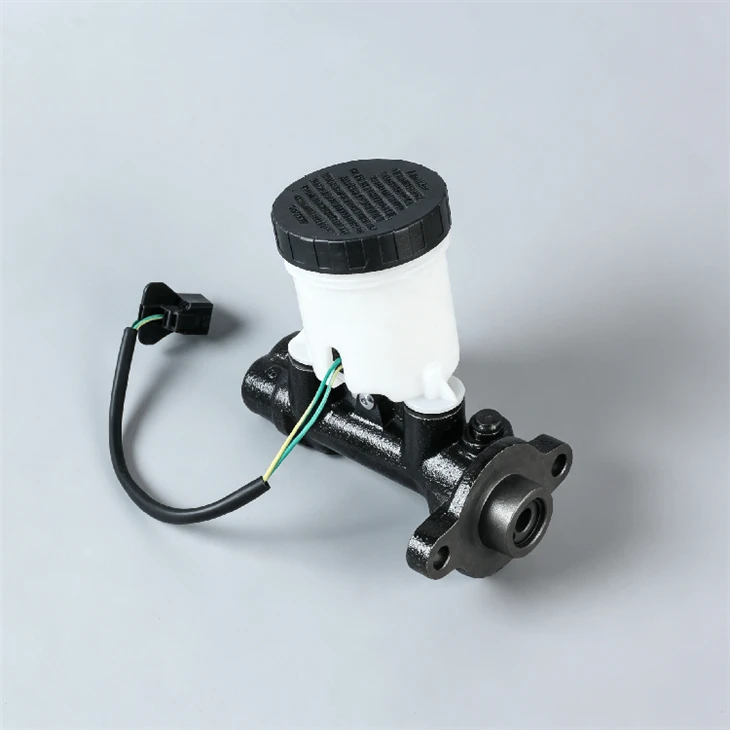
Brake master cylinder is the core component of hydraulic braking system. Its main function is to convert the mechanical force applied to the brake pedal into hydraulic pressure, which is transmitted to the wheel brake mechanism through the brake line. Because of the differences in weight, braking structure, wheel configuration, hydraulic system design and so on, brake master cylinders may not be interchangeable between different models.
Some brake master cylinders may look similar in appearance, installation methods and even port positions during vehicle maintenance and parts procurement, but that doesn't guarantee the same braking performance. Determining the compatibility of the brake master cylinder requires verification of a number of factors, including vehicle fitment, hydraulic parameters, mechanical dimensions, and the overall configuration of the braking system.
1.Why can't brake master cylinders be used interchangeably in different models?
Braking systems are usually designed based on a a vehicle's weight, tire size, brake structure and overall dynamic performance. As the pressure source of the hydraulic system, the brake master cylinder's specifications must be consistent with other braking components.
For example, different vehicles may utilize brake calipers, brake discs or drum brakes different specifications, which may result in different requirements for the volume and pressure of hydraulic fluid. Installing an incompatible brake master cylinder can alter brake pedal travel and even affect how the driver feels and controls the pedal.
In addition, modern vehicles may have systems such as ABS (Anti-lock Braking System) or ESC (electronic stability control system); brake master cylinder must be compatible with the hydraulic structure of the entire braking system.
Therefore, determining the suitability of the brake master cylinder is not just a matter of checking that it can actually be mounted on the vehicle; it must also be verified that it meets the technical requirements of the entire braking system.
2.What impact do piston diameter and hydraulic parameters have?
The piston diameter of brake master cylinder is the key parameter to determine compatibility. Piston size affects the volume of hydraulic and brake fluid produced braking process braking.
If the piston diameter of the replacement master cylinder differs significantly from the original vehicle specification, brake pedal travel and pedal the "feel" may change. For example, a change in the size of the master cylinder may require longer pedal stroke to achieve the same braking force, or it could make the pedal feel stiffer or more responsive.
This does not mean that larger piston diameters are always better, nor can it be simply assumed that the same size guarantees interchangeability. Proper matching requires consideration of the brake calipers, brake booster and the vehicle's overall hydraulic system.
Therefore, when purchasing brake master cylinder, the the original unit's piston size and related technical specifications should be verified and compared with replacement parts.
3. Mounting dimensions and port specification must also match
The mechanical structure of the brake main cylinder is another key factor in determining whether the brake main cylinder can be installed. The main cylinder of different models may differ in the spacing of mounting holes, the length of the valve body, the size of the push rod connection and the method the reservoir is installed.
Brake line ports also require to be scrutinized. Different models may use different numbers of sockets, threaded specifications and port positions. Incompatible port specifications-even mandatory installation-increase the risk of brake fluid leaks and faulty line routing.
In addition, the connection between the main cylinder and the brake booster must be correct. The performance of the braking system may be affected if the pushrod length, connection point or installation depth do not conform to the design specifications.
Therefore, when determining whether two brake master cylinders are interchangeable, it is important to check both mechanical dimensions and hydraulic ports, rather than relying solely on appearance.
4. ABS and other braking system configurations must be considered
Modern car braking systems rarely operate alone; the main cylinder works with ABS, Electronic stability control (ESC), brake booster and wheel brake mechanisms to form a complete system.
Hydraulic circuit designs and electronic control methods for vehicles vary; consequently, the master cylinder suitable for standard braking system may not be suitable for vehicles with specific electronic brake control configurations.
When replacing master cylinder, it is particularly important to verify the number of brake circuits and the structure of the hydraulic system. If the replacement unit's fluid circuit design is not compatible with the vehicle's control system, the normal transmission of hydraulic braking pressure could be affected.
For vehicles with ABS systems, you must also make sure that the replacement main cylinder is compatible with the existing system. Just because there are similar external dimensions does not guarantee that the units are interchangeable. How to tell if the brake master
5.cylinder is interchangeable between two models?
You can verify this through several steps in actual purchase or maintenance process.
First, record the brand, model, year of manufacture and braking system configuration of the vehicle. Next, check the part number on the original brake master cylinder and compare it to the replacement part number.
Then, the piston diameter, installation size, port specification, number of outlet ports and reservoir structure are further verified. If the vendor provides a complete list of compatible models, you can also cross-reference them with your vehicle information.
For businesses that buy auto parts in bulk, you can also ask suppliers for product specifications, compatibility information and relevant test data. If this is still not possible, it is advisable to verify further with a professional mechanic or consult the vehicle manufacturer's technical documentation.
Note that "fit" and "functioning" are two different concepts. Actual use can only be considered if the mechanical structure and hydraulic performance meet the requirements.
6. What are the problems with using an incompatible brake master cylinder?
Installing incompatible brake master cylinder can lead to problems such as abnormal brake pedal travel, change of pedal feel and unexpected brake force response.
Poor sealing of joints can also lead to brake fluid leakage. In hydraulic braking system, any problems affecting pressure buildup and transmission must be dealt with in a timely manner.
In addition, if parameters do not match those of brake booster, clamp or ABS system, the entire braking system may not be able to operate as originally designed.
Therefore, when choosing to replace the brake master cylinder, it is best not to think only about price or appearance. The correct method is to first determine the specification of the vehicle and brake system specifications, then verify the parameters and compatibility information of the main cylinder.
Generally speaking, brake master cylinders of different models are not directly interchangeable. Use should be considered only if the manufacturer explicitly confirms compatibility and if mechanical dimensions, hydraulic parameters, connection ports and brake system configurations are in place. Maintenance and replacement involving braking systems shall be in accordance with the vehicle manufacturer's service guidelines.
Frequently Asked Questions
1. Can different brands of cars swap brake master cylinders?
They are usually not directly interchangeable. Different brands and models have different brake system designs, and compatibility must be determined according to specific models and technical parameters.
2.Can brake master cylinders be replaced simply because they look the same?
No. Similar products may vary in piston diameter, internal fluid channels, port specifications, or hydraulic performance.
3. What parameters should be checked to determine the compatibility of the brake master cylinder?
Key factors to check include vehicle type and transmission details, part number, piston diameter, installation size, port specification, number of outlet ports and brake system configuration.
4. The bigger brake master cylinder, the better?
No. The size of the master cylinder must match the overall braking system of the vehicle; performance cannot be determined simply by increasing or decreasing the piston size.
5. What needs to be done after replacing the brake master cylinder?
As a general rule, you must deflate the brake system in accordance with vehicle maintenance specifications and inspect for brake fluid, line connections and system performance.
6. How to avoid buying the wrong brake master cylinder
Before purchase, record the part number of the original main cylinder and record the vehicle model, year and brake system configuration; then cross-reference this information with the compatibility details and product specifications provided by the supplier.


