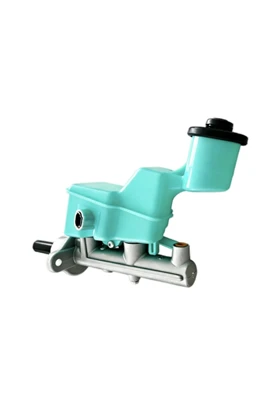
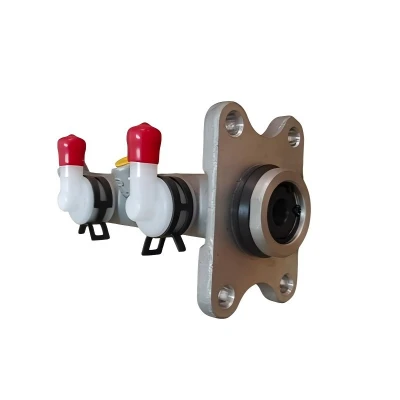
Basic Types and Characteristics of Wheel Cylinder Brakes
Wheel cylinder brakes apply braking force by hydraulically pushing a piston to squeeze brake shoes or pads. Based on piston arrangement, they fall into three categories:
Single-Piston Wheel Cylinder
Structure: A single piston is positioned on one side of the wheel cylinder, actuating one brake shoe. Braking force on the opposite side is generated through mechanical linkage (e.g., a regulator).
Characteristics: Simple structure and low cost, but exhibits poor braking force symmetry, often leading to uneven brake shoe wear. Piston diameter typically ranges from 20-40mm (Source: SAE J2788 standard), suitable for rear wheel brakes on light vehicles.
Opposed-Piston Wheel Cylinder
Structure: Two pistons symmetrically arranged on opposite sides of the wheel cylinder simultaneously actuate brake shoes or pads on both sides.
Features: Uniform braking force distribution and excellent heat dissipation, commonly found in disc brakes. Piston diameters range from 30-60mm, providing higher braking force (Reference: Bosch Brake Technology Manual), primarily used for front wheels or high-performance vehicles.
Floating Wheel Cylinder
Structure: Single-piston design, but the entire caliper can float axially. Self-centering action balances braking force on both sides.
Features: Combines the compactness of a single-piston design with the balance of a dual-piston design. Commonly found in drum brakes. Piston diameter: 25-45mm. Suitable for medium-to-low load commercial vehicles (e.g., light trucks).