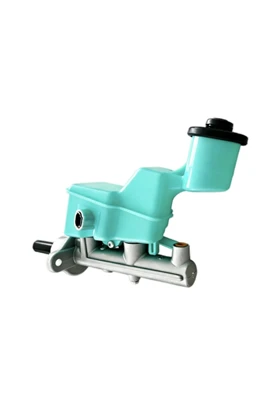
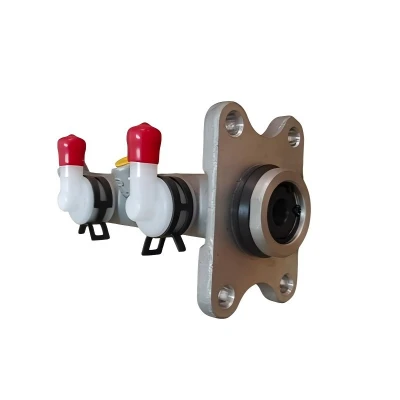
The brake master cylinder serves to push brake fluid (or gas) through the brake lines to each brake caliper or wheel cylinder, actuating their pistons and thereby enabling vehicle braking. Specifically:
Working Principle
When the driver presses the brake pedal, a piston inside the master cylinder is forced forward by mechanical input transmitted via a pushrod. This action pressurizes the brake fluid, which is then sent through the brake lines to the pistons in each brake caliper (or wheel cylinder). These pistons then push the brake pads against the brake rotors (or expand the brake shoes against the inner surface of the brake drums), creating friction that slows or stops the vehicle. When the brake pedal is released, the master cylinder piston returns to its original position due to the combined action of a return spring and hydraulic pressure, preparing the system for the next braking event.
Core Function
The brake master cylinder converts the mechanical force applied by the driver on the brake pedal into hydraulic pressure-a critical process in the vehicle's braking system. This conversion allows the driver to effectively control vehicle deceleration and stopping with minimal physical effort.
Emergency Braking
During emergency braking, the master cylinder utilizes a compensating port to draw additional fluid from the reservoir into the front chamber of the piston. This increases the volume of fluid ahead of the piston, thereby generating higher hydraulic pressure and greater braking force to enhance safety.
In summary, the brake master cylinder is a vital component of a vehicle's braking system and plays an essential role in ensuring driving safety.