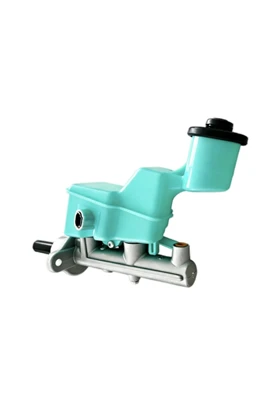
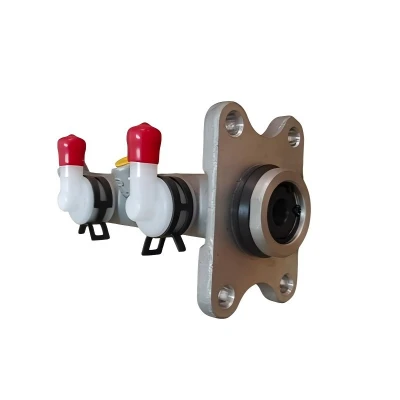
Brake wheel cylinders are critical components in automotive braking systems, primarily responsible for converting hydraulic pressure into mechanical force. This force drives brake shoes to friction against brake drums, thereby achieving braking. Their structural characteristics vary by type. Below are the core features of common types:
Dual-Piston Caliper
Dual-piston design: Features two internal pistons that evenly distribute braking force, accommodating dual-circuit drive systems to enhance braking stability.
Rapid emergency response: Enables swift activation during emergency braking, reducing stopping distance.
Spun-Sealed Brake Cylinder
Lightweight: Total weight is approximately 50% of cast iron cylinders. Manufactured using a single-step spinning process, eliminating complex machining.
High-Precision Inner Surface: Inner surface roughness reaches Ra 0.8 microns, significantly outperforming cast iron cylinders (Ra 16 microns), extending cup seal lifespan.
Weldability and Interchangeability: Cylinder body allows welding of auxiliary components and is interchangeable with identical cast iron cylinders.
Cast Iron Sealed Brake Cylinder
Traditional Structure: Features a cast iron cylinder body with relatively high inner surface roughness (Ra 16 μm), requiring multiple machining operations.